FOGO detects and resolves gradient interference via spectral orthogonalization and compact codebook memory to prevent dominant directions from suppressing rare updates, improving convergence and retention across continual and standard training.
ProCTI retrieves global dataset prototypes to augment local conditioning in diffusion-based time series imputation, improving accuracy under sparse or noisy missingness with theoretical guarantees.
DoAtlas-1 introduces causal compilation to convert medical evidence into executable causal estimands, achieving 98.5% canonicalization accuracy and 80.5% query executability across 1,445 effect kernels.
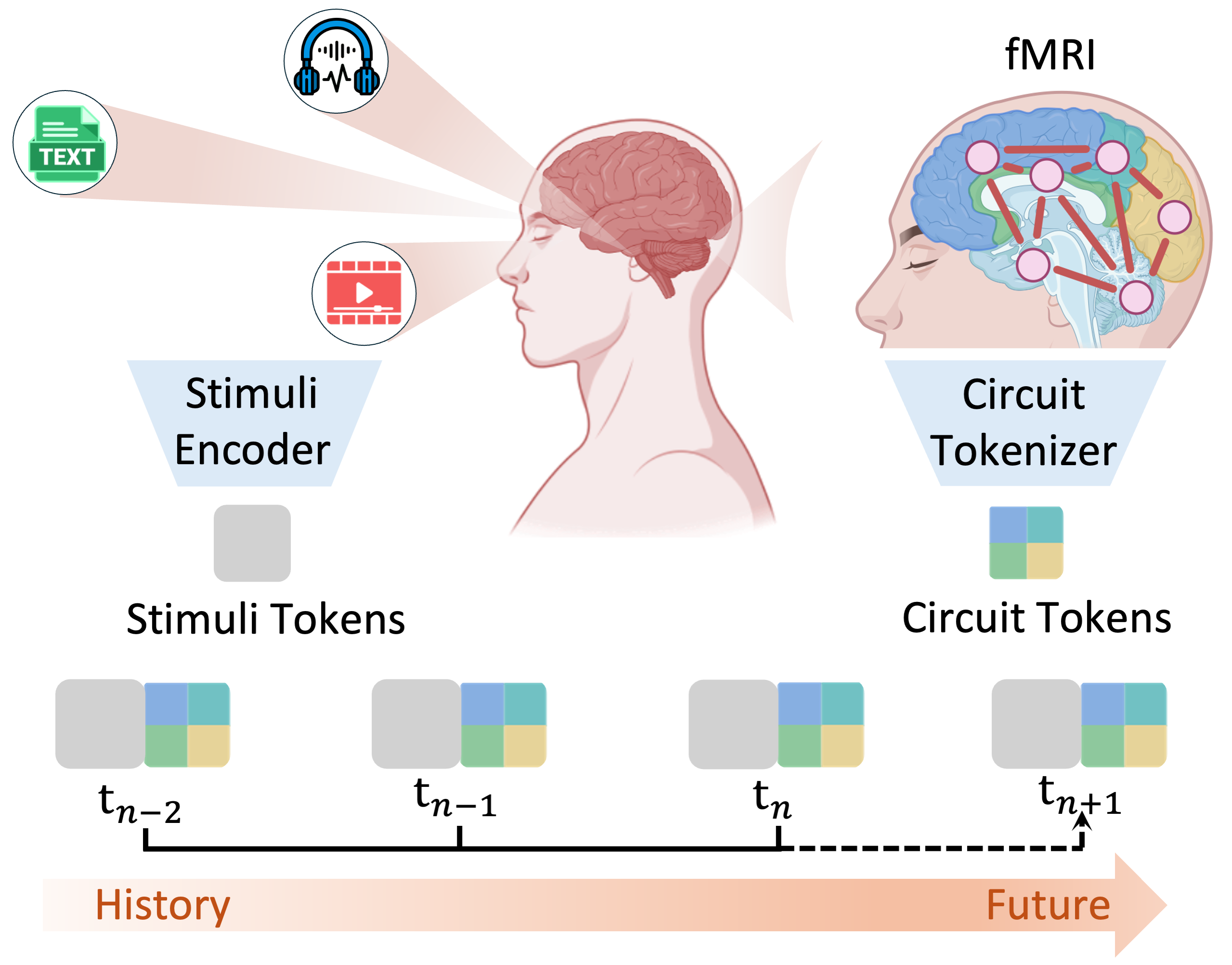
BrainVista models brain dynamics via multimodal next-token prediction with network tokenizers and stimulus masking, achieving state-of-the-art fMRI encoding and up to 36% better long-horizon rollout correlations.
TRACE introduces tourism dialogues pairing multi-turn recommendations with review citations and rejection turns to expose the Three-Competency Gap across accuracy, grounding, and recovery.
Contrastive identification and generation in the limit studies learning from unlabeled differing pairs, yielding geometric characterizations, a strict generation hierarchy, and robust corruption reversal via common crossing graphs.
Look-Before-Move separates observation specification from motion execution for narrative-grounded camera planning, improving subject perception, intent consistency, and trajectory quality over baselines.
Root cause analysis benchmarks conflate retrieval and reranking failures, revealing graph methods rarely beat statistical baselines; a two-stage retriever-LLM reranker matches or exceeds all baselines without causal graphs or labels.