TriSearch uses reinforcement learning and circuit-based flip representations to optimize triangulations across dimensions, discovering more Calabi-Yau triangulations than existing samplers.
A training-free test-time defense uses stochastic resonance of latent ensembles via input translations to recover up to 68.1% of adversarial accuracy loss on classification and dense prediction tasks.
MURPHY extends GRPO to multi-turn code generation via feedback-conditioned rollout trees with retrospective credit assignment, achieving up to 6% absolute pass@1 gains over prior methods.
PG-LRF uses a physiology-guided latent rectified flow with an electro-hemodynamic simulator to generate physiologically plausible ECGs from PPG, improving generation and cardiovascular disease classification.
kFFM replaces arbitrary pairing in Functional Flow Matching with kernel optimal transport to improve infinite-dimensional generative modeling and outperforms baselines on time-series and PDE benchmarks.
Deep ReLU networks with input and hidden widths ≥2 have open sets of identifiable parameters, yielding exact functional dimensions and generic depth hierarchies.
Inertia-1 explores wearable motion foundation models via 18.2M hours of accelerometer data, yielding state-of-the-art recipes and open design principles for diverse sensing tasks.
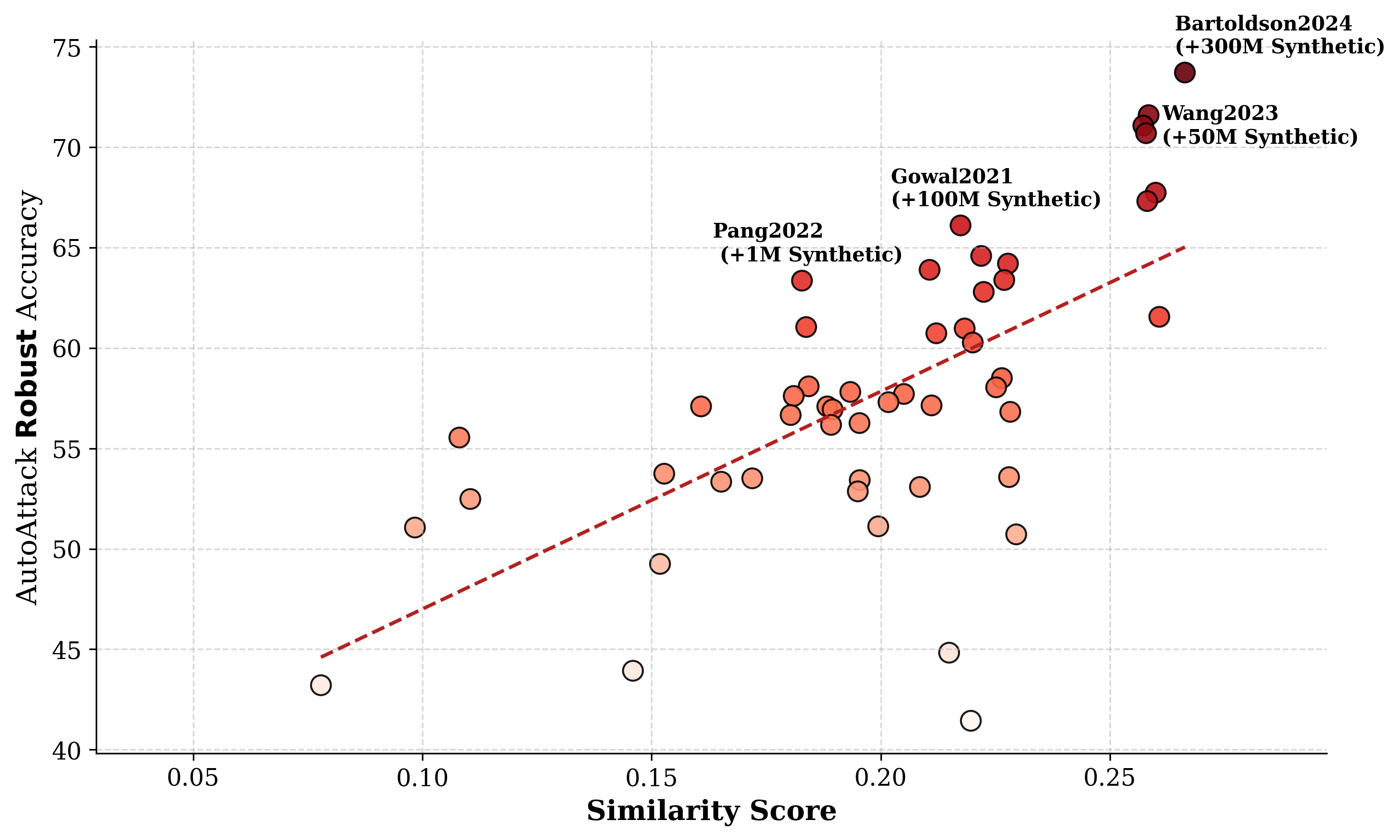
Diffusion representations provide diverse, partially robust features that improve adversarial training robustness as an auxiliary signal, complementing synthetic data.
Under outcome-only supervision, scaling training-time reasoning length improves OOD performance after ID saturation via stronger inductive biases and reduced shortcut reliance.
Unify-Agent reframes image synthesis as an agent pipeline with search and recaptioning, improving generation of long-tail factual concepts via 143K curated trajectories.
A framework generates provably robust verification instances with known ground-truth labels and exposes numeric errors and bugs in state-of-the-art neural network verifiers.