History-Aware Prediction Sets (HAPS) construct conformal prediction sets for censored time-to-event outcomes using time-varying covariate histories, reducing interval lengths up to 75% while maintaining coverage among survivors.
A residual-based continuity loss for Wasserstein gradient flows yields a simulation-free stitching method robust to sparse observations and state-of-the-art on trajectory inference benchmarks.
TIDES moves input dependence from step size to the state matrix in selective SSMs, preserving physical time steps and per-token expressivity for irregular series, achieving state-of-the-art time-series results.
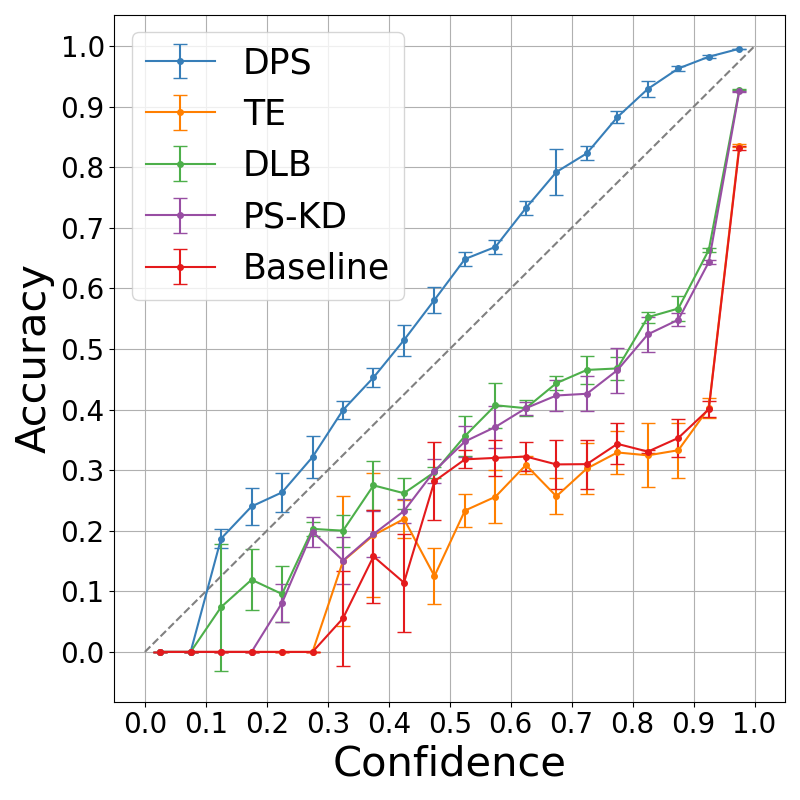
Deep Probabilistic Supervision constructs sample-specific target distributions via statistical inference on model predictions, improving accuracy, calibration, and label-noise robustness without hard targets.
A fixed-point framework proves looped transformers need recall plus outer normalization for stable, input-dependent extrapolation, validated across chess, sudoku, and prefix-sums tasks.
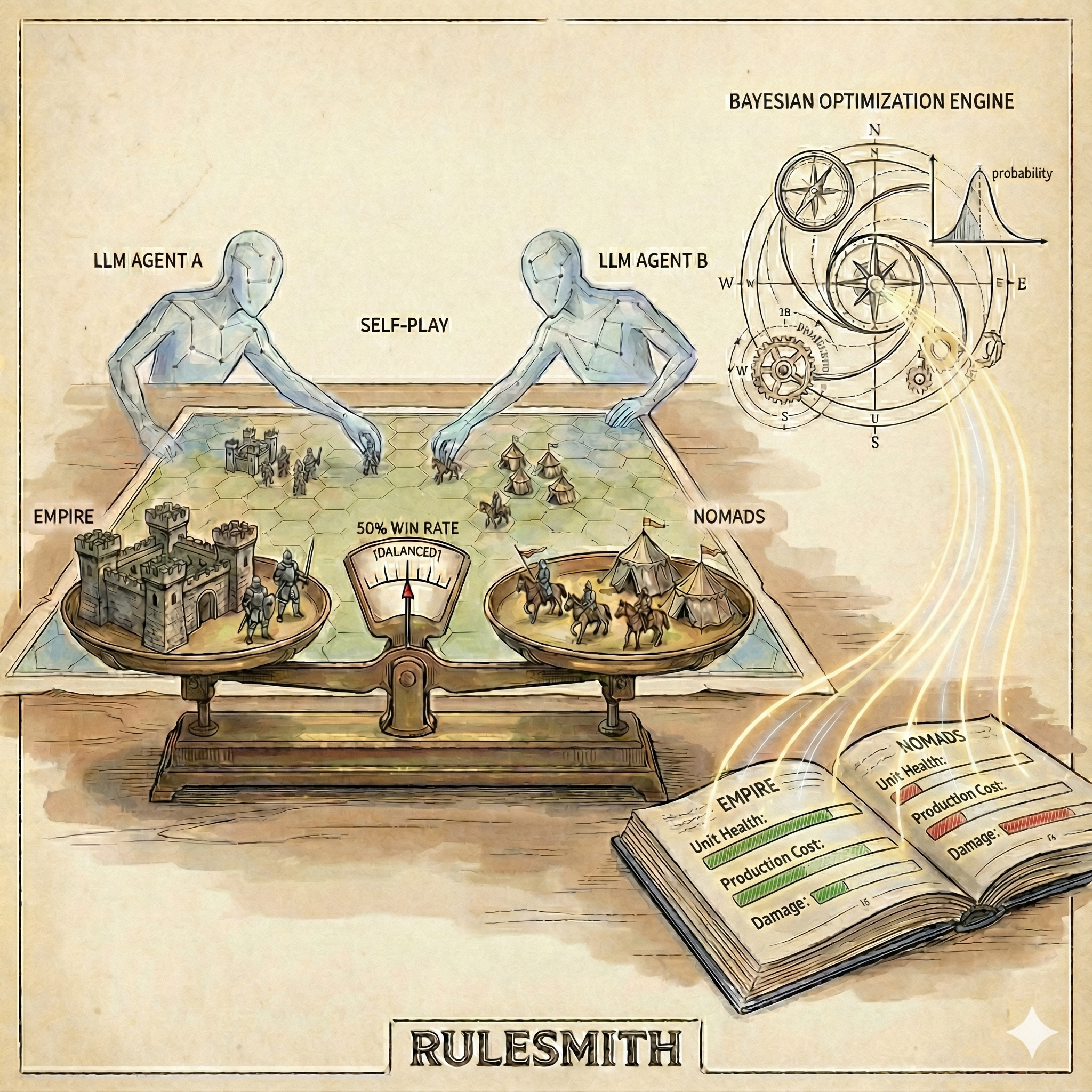
RuleSmith uses multi-agent LLM self-play and Bayesian optimization to automatically balance complex games and find highly balanced rule configurations.
RoPEMover manipulates diffusion transformer position embeddings to move objects with depth-aware 3D geometry, preserving identity, occlusions, and shadows with minimal real data.
New wavelet-based DPPs offer superior accuracy and a conversion method yields low-rank discrete kernels that preserve variance decay for rough objectives.